Specials
Functional & Regenerative Medicine
Close
Functional Medicine
Regenerative Medicine
Aesthetic Services
Gut Health Testing
More

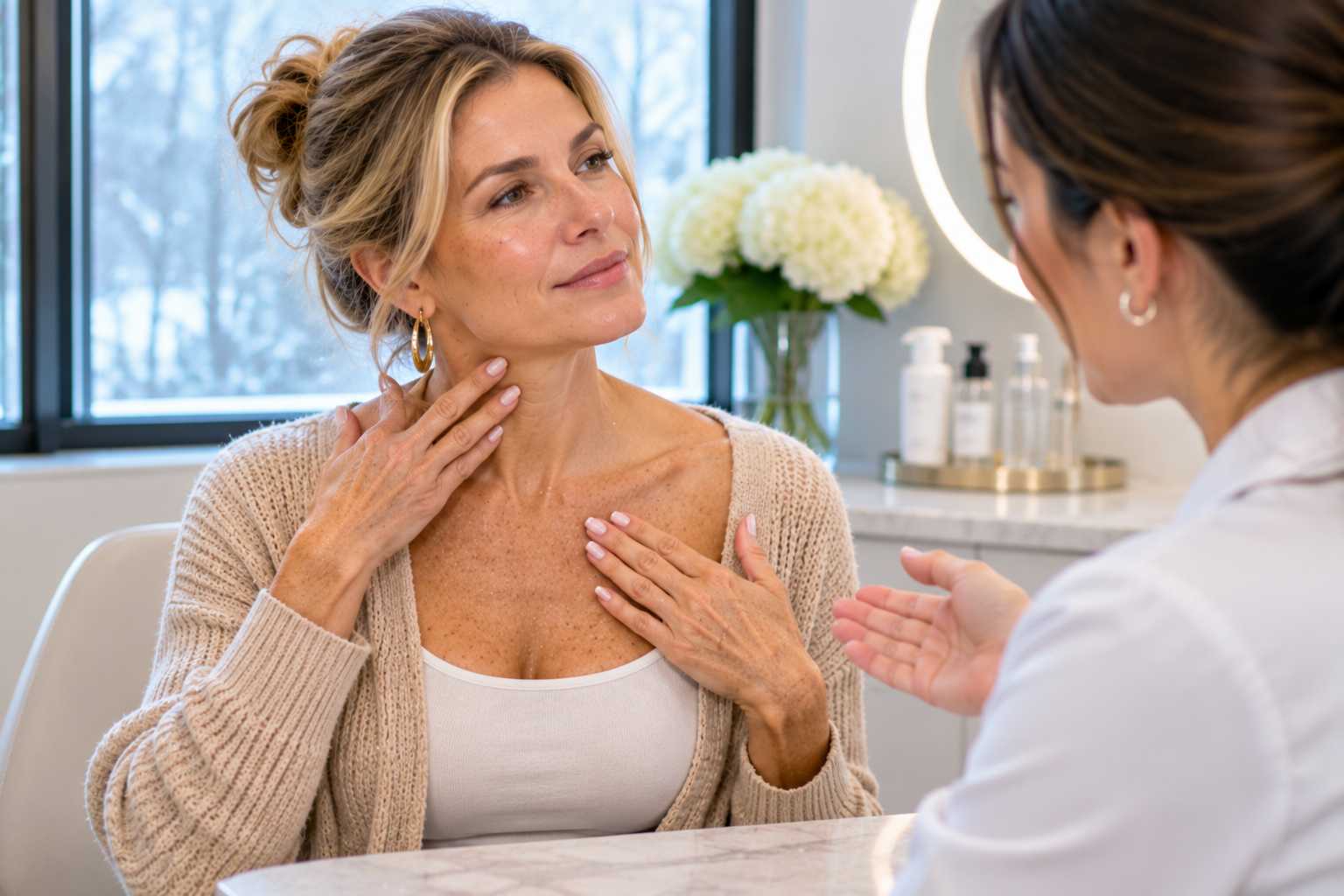
Most people focus their skincare on the face. But years of summers at Nantasket, afternoons on the water, and rounds of golf tend to show up somewhere else first: the chest, the side of the neck, and the backs of the hands. These areas often get less sunscreen and less attention, so freckling, crepey texture, and fine lines can appear there before they show on the face.
Collagen therapy is a broad term for treatments that encourage your skin to rebuild collagen, the protein that keeps skin firm and smooth. At New England Wellness Center in Hingham, several collagen-focused treatments are designed for different areas and concerns. Here is how collagen therapy works, which options suit sun-damaged skin, and how to choose.
Collagen therapy refers to treatments that stimulate your skin's natural collagen production to improve firmness, texture, and tone. Instead of adding collagen directly, these treatments trigger the skin's repair process. Results build gradually over weeks and months.
There are two main types of collagen stimulation:
Collagen naturally declines with age, but sun exposure speeds the process. Ultraviolet light breaks down collagen and elastin, leading to fine lines, crepey texture, and uneven pigment. Hormone changes also play a role. The American Academy of Dermatology notes that skin loses collagen quickly in the early years of menopause, along with an increase in age spots on the face, hands, neck, arms, and chest.
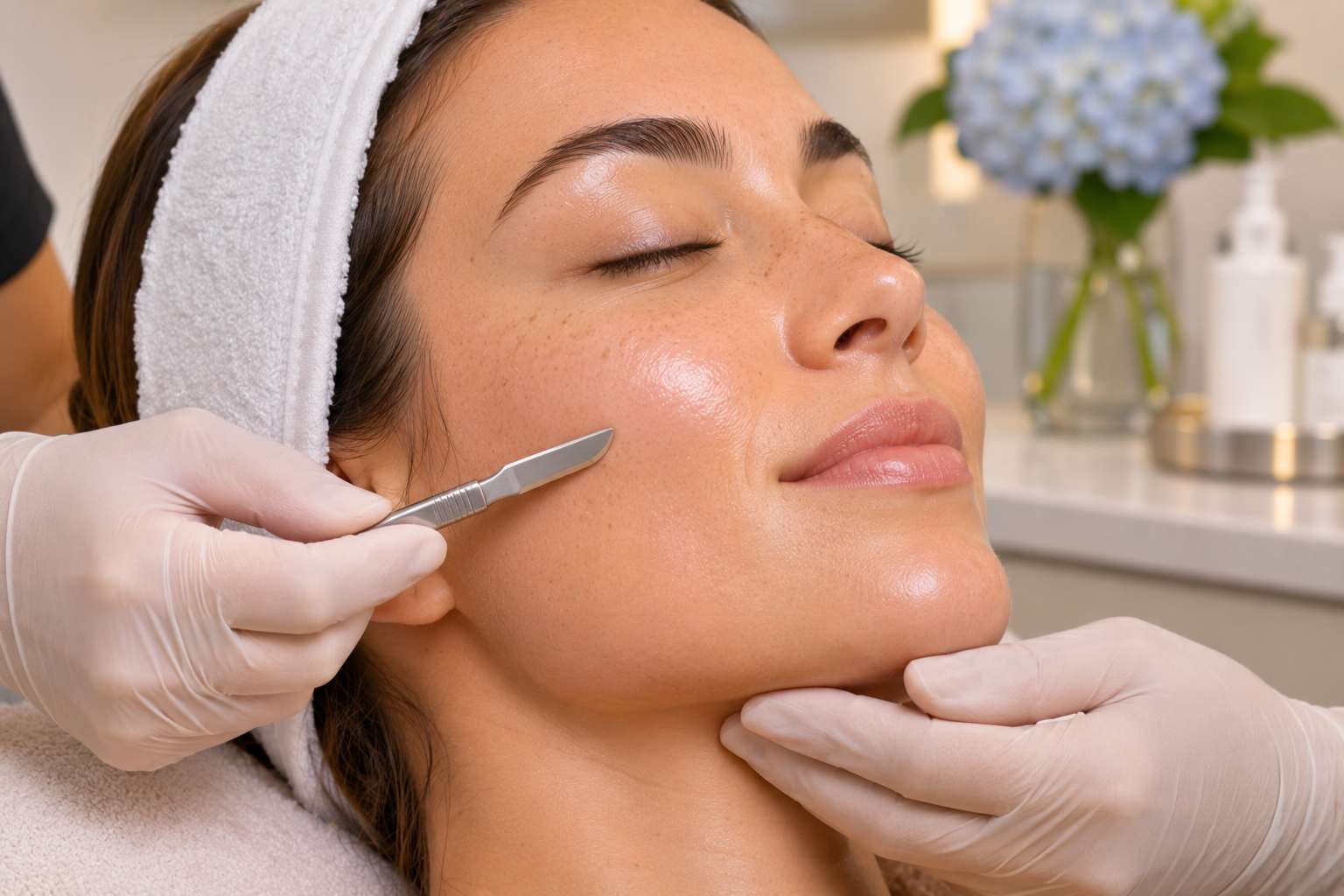
Collagen induction therapy, often called microneedling, uses very fine needles to create tiny channels in the skin. These micro-injuries prompt the skin to produce new collagen and elastin. Over time, the result is smoother texture, softer fine lines, and more even tone.
Cleveland Clinic explains that this healing response increases collagen and elastin production, and that redness and swelling can last a few days afterward.
New England Wellness Center's Collagen Induction Therapy uses AQUAGOLD, a device with 20 gold-plated microchannels, paired with growth factors from your own blood. The treatment is used for:
Sessions take about 15 to 30 minutes, and brief redness afterward is common.
AQUAGOLD collagen induction is not right for everyone. Tell your provider if you are pregnant, have taken isotretinoin, have active eczema or rosacea, tend to scar, have a history of poor healing, or have had recent radiation to the skin. These factors may mean waiting or choosing another option.
For sun damage, fine lines, and uneven tone on the chest and neck, collagen induction therapy is a strong starting point because it addresses surface texture and pigment. For crepey skin with some volume loss, a biostimulator may also help. The best plan often combines approaches.
Radiesse is a biostimulator that New England Wellness Center uses for the neck and décolletage, among other areas. It provides immediate support and encourages collagen over the following weeks, with full benefit in about two to three months. FDA approval for Radiesse covers specific areas, so your provider will explain which uses are on-label and which are off-label before treatment.
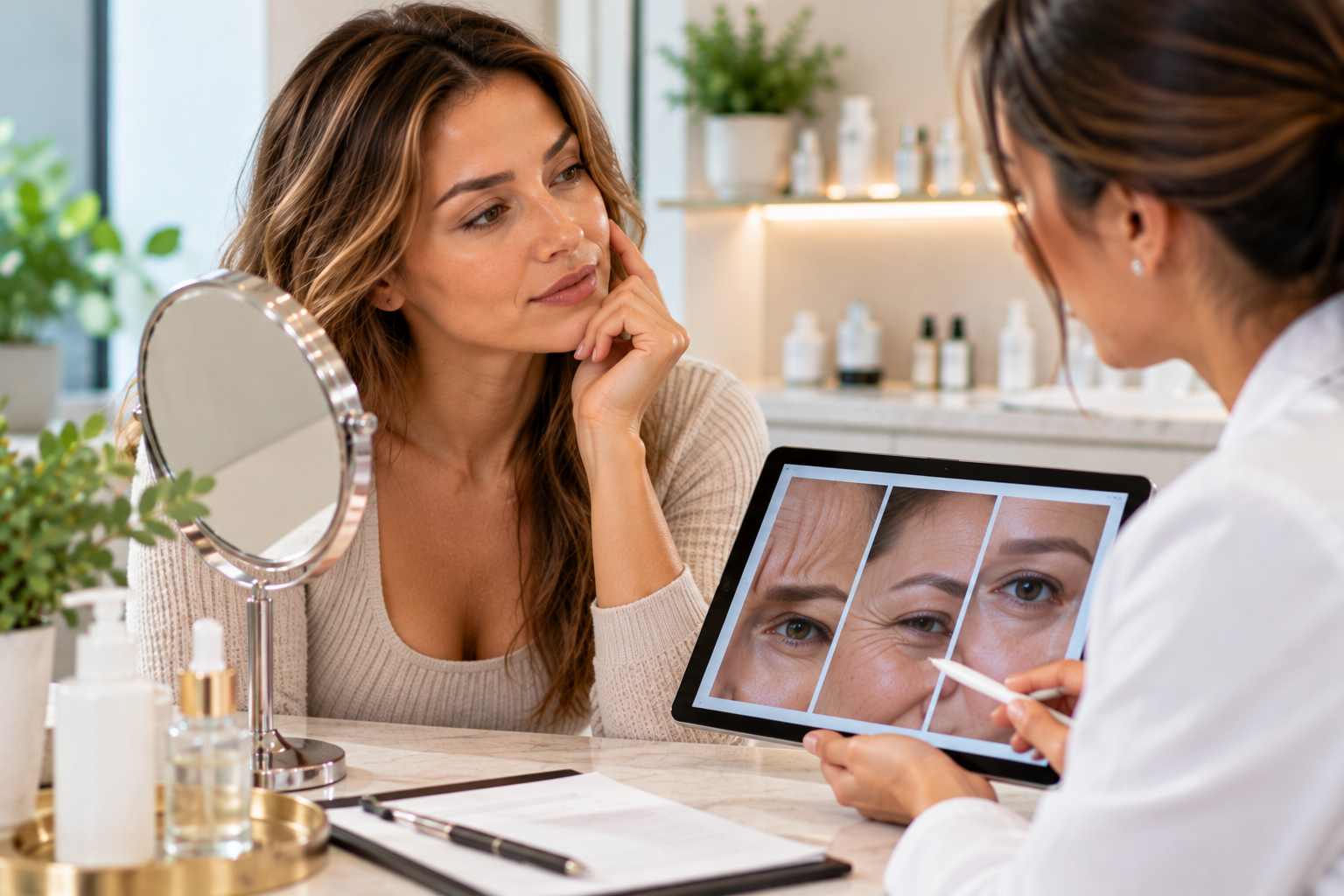
Because the chest and neck are delicate, careful candidacy and technique matter. A consultation will help determine whether microneedling, a biostimulator, or a combination makes the most sense for your skin.
Aging hands often show two changes: sun spots and texture on the surface, and thinning that makes veins and tendons more visible. Collagen induction therapy helps with surface sun damage, while Radiesse restores volume and supports collagen beneath the skin. Many people benefit from addressing both.
Radiesse is used to rejuvenate the hands by softening the look of visible tendons and veins. Combined with AQUAGOLD for surface sun damage, it can help hands look more in step with a refreshed face.
If you have a spot on your hands, chest, or neck that is changing, growing, bleeding, or looks different from the others, see a dermatologist before any cosmetic treatment. Some sun-related spots need medical evaluation.
Yes. For the face, collagen therapy options include microneedling, radiofrequency microneedling, biostimulators, and PRP-based treatments. The right choice depends on whether your main concern is texture, fine lines, laxity, or volume loss.
Collagen therapy suits adults noticing early laxity, fine lines, crepey texture, or sun damage who want gradual, natural-looking improvement. Different groups often have different priorities, from long-term maintenance to sun repair after years outdoors.
Clients who invest in their appearance often care about consistency between the face, neck, chest, and hands. A refreshed face paired with sun-spotted hands or a crepey neckline can look mismatched. Collagen therapy offers a refined, head-to-toe approach that fits well into a long-term maintenance plan. Many high-end clients schedule treatments during fall and winter, when there is less sun exposure, so skin is ready for summer on the South Shore.
Women in perimenopause and menopause may notice faster changes in firmness and texture as collagen declines. Collagen therapy can help with the visible side of that change. Some women also choose to explore the internal side through Menopause care, which begins with evaluation and lists skin elasticity among its concerns.
Men who have spent years sailing, golfing, fishing, or working outside often have sun damage on the neck and hands they never noticed until recently. Collagen induction therapy offers a practical way to improve texture and tone, with sessions that take about 15 to 30 minutes and brief redness afterward.
Sun protection is essential. The Skin Cancer Foundation recommends a broad-spectrum SPF 30 or higher every day and SPF 50 or higher for extended time outdoors, reapplying every two hours. Do not forget your neck, chest, and the backs of your hands.
Results build gradually. Many people notice early improvement within weeks, with continued changes over several months as new collagen forms.
Microneedling is one type of collagen therapy. Collagen therapy also includes biostimulator injections and radiofrequency microneedling, which encourage collagen in different ways.
Most people benefit from a series of treatments. Your provider will recommend a plan based on your skin, goals, and the area treated.
Collagen induction therapy can improve the appearance of sun damage and uneven tone. It will not prevent new spots, so daily sun protection remains important.
Collagen induction therapy usually involves brief redness for a short time. Biostimulator injections may cause temporary swelling or bruising at the injection sites.
Your chest, neck, and hands have been through every South Shore summer right along with your face. Collagen therapy offers a way to give them the same care, with gradual, natural-looking improvement that fits your life.
Learn more about the team on the About Us page or visit New England Wellness Center. When you are ready, book a consultation in Hingham or call (781) 745-9021 to build a collagen plan that covers every area that matters to you.