Specials
Functional & Regenerative Medicine
Close
Functional Medicine
Regenerative Medicine
Aesthetic Services
Gut Health Testing
More

Few skin treatments come with as many myths as dermaplaning. You have probably heard that the hair will grow back thicker, darker, or faster. You may have seen at-home razors all over social media, or wondered whether dermaplaning is just a fancy way to shave your face.
These questions are worth answering, because dermaplaning is one of the simplest ways to get smoother, brighter skin, and the myths keep many people from trying it. Here is what dermaplaning really does, which common beliefs are false, and who is most likely to benefit, based on how the treatment is offered at New England Wellness Center in Hingham.
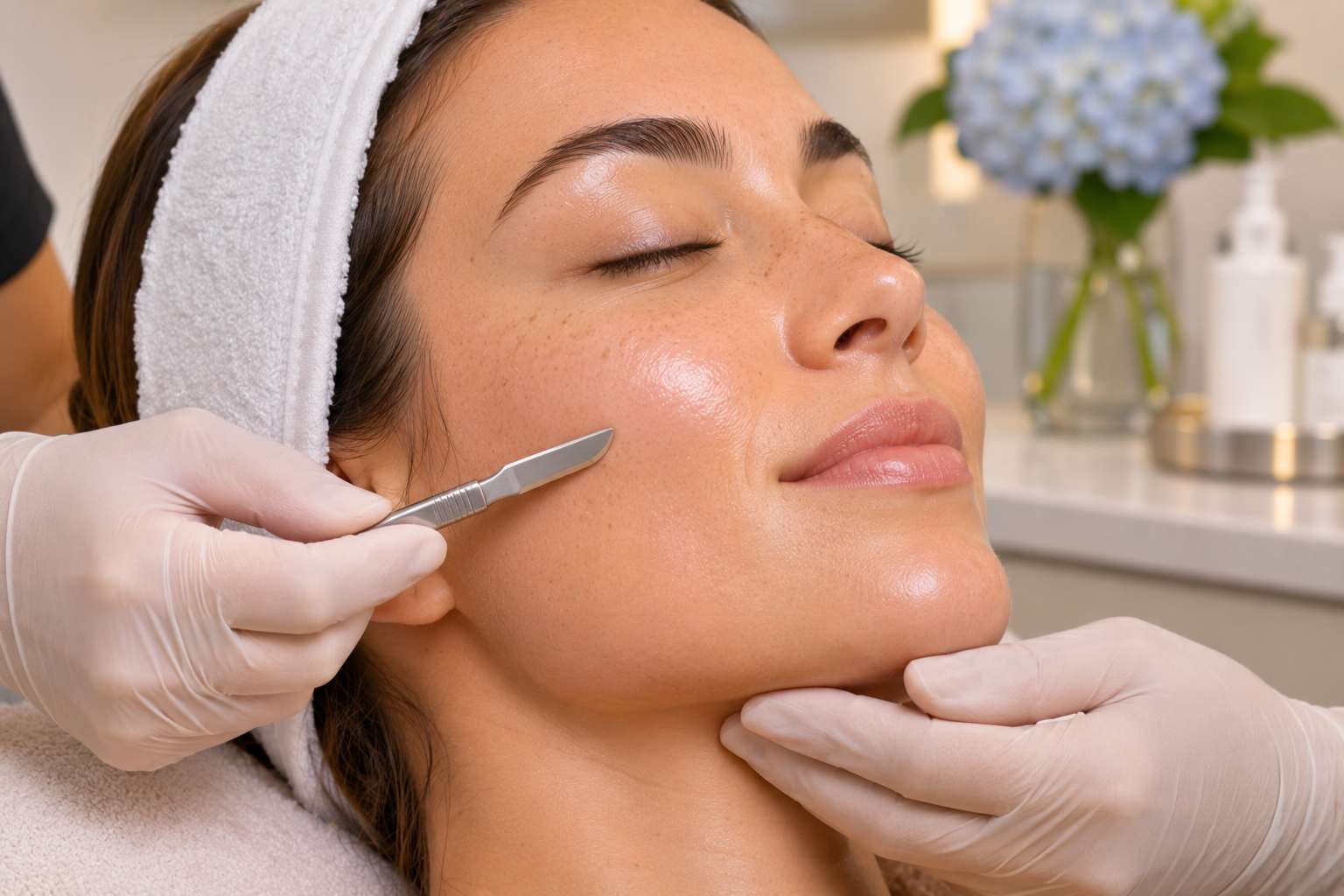
Dermaplaning is a professional exfoliation treatment that uses a sterile blade to gently remove dead skin cells and fine, soft facial hair, often called peach fuzz. The result is a smoother surface and a brighter look. Most people schedule it every four to six weeks.
At New England Wellness Center, Dermaplaning is part of the Go & Glow menu. It is used to address dullness, peach fuzz, fine lines, and uneven tone, and to help skincare products absorb better and makeup go on more smoothly.
No. Dermaplaning does not change the thickness, color, or growth rate of your facial hair. Hair may feel slightly blunt as it grows back because it was cut at the surface, but the hair itself is the same. This is one of the most persistent myths in skincare.
Mayo Clinic explains that removing hair at the surface does not change its thickness, color, or rate of growth. Regrowth can feel coarse because of the blunt tip, and it may look more noticeable for a short time, but it is not actually thicker or darker.
The fine peach fuzz that dermaplaning removes is called vellus hair. If you notice new, dark, coarse hair growing on your chin, upper lip, or jawline, that is a different issue and is not caused by dermaplaning. Sudden or increasing coarse hair growth in women can be linked to hormones and is worth a medical evaluation. New England Wellness Center offers evaluation through its PMOS (formerly known as polycystic ovary syndrome, or PCOS) service, and Laser Hair Removal may be discussed for coarse hair after evaluation.
Not quite. Both use a blade, but dermaplaning is a professional exfoliation treatment, not just hair removal. It removes a layer of dead skin cells along with peach fuzz, using a sterile blade and a careful technique. The goal is smoother, brighter skin, not simply less hair.
A trained provider holds the skin taut and uses controlled strokes, which helps reduce nicks and irritation. That is quite different from a quick swipe with a razor in the bathroom mirror.
At-home dermaplaning tools are popular, but they are not the same as a professional treatment. Without proper technique, it is easy to nick the skin, irritate it, or exfoliate too often. A professional session is more controlled and can be paired with a plan for your skin type.
If you discovered dermaplaning through social media, you are not alone. It is one of the most viral skincare treatments online. But trends rarely show the downsides of doing it at home: tiny cuts, breakouts from bacteria, and over-exfoliation that leaves skin red and sensitive. Using the same blade more than once or dermaplaning over active breakouts can make things worse.
Younger adults often get the most from dermaplaning as an occasional professional treatment, paired with a simple routine of gentle cleanser, moisturizer, and daily sunscreen. If you are dealing with active acne, a different treatment is usually a better place to start.
Dermaplaning is not recommended over active breakouts. Running a blade over inflamed pimples can irritate the skin and spread bacteria. People with active acne are usually better served by other treatments, while dermaplaning may help the look of superficial acne scars once skin is calm.
For breakouts, a Chemical Peel or a HydraFacial may be a better fit. If your acne is painful, deep, or leaving scars, see a dermatologist for evaluation.
No. Dermaplaning usually involves little recovery. Some people notice mild redness or sensitivity for about 24 to 48 hours, which then settles. Most people return to their normal routine the same day.
During that window, keep skincare gentle. Skip strong exfoliating acids and retinoids for a day or two, moisturize, and wear sunscreen, since freshly exfoliated skin can be more sensitive to the sun.
Dermaplaning suits people who want brighter, smoother skin, less visible peach fuzz, and a better surface for makeup and skincare. It is gentle enough for many skin types, but it is not ideal for active acne, sunburn, or irritated skin. A provider will confirm whether it fits your skin.
Many women love dermaplaning because it helps makeup glide on more evenly. Peach fuzz can catch foundation and powder, making skin look textured in photos or daylight. Removing it, along with dead skin cells, can make makeup sit more smoothly. It is a popular choice before weddings, holiday parties, and events.
Women in perimenopause and menopause may also notice drier, duller skin as hormones shift. Dermaplaning, paired with a HydraFacial, can help address surface dullness, while the Menopause service can look at what is happening internally.
Men can benefit from the exfoliating side of dermaplaning, especially for dullness and rough texture. Because coarse beard hair is different from the fine peach fuzz dermaplaning is designed for, your provider will plan treatment areas with you during your consultation. Men who want a simple, polished look often pair it with a HydraFacial.
Dermaplaning is quick and requires little recovery, which makes it easy to fit into a workweek. Schedule it a few days before a big meeting or event so any mild redness has time to settle.
Most people schedule dermaplaning every four to six weeks. That spacing gives your skin time to recover and lets peach fuzz grow back before the next session. Going more often can lead to irritation.
No. Dermaplaning does not change the thickness, color, or growth rate of facial hair. Regrowth may feel blunt at first, but the hair itself is the same.
Many people with sensitive skin tolerate dermaplaning well, but it depends on your skin. Tell your provider about sensitivity, rosacea, or eczema so they can decide whether it is a good fit.
Dermaplaning may help the look of superficial acne scars by smoothing the surface. Deeper scars usually need treatments like Skin Resurfacing (Morpheus8) or Venus Viva.
Smoother, brighter skin is often noticeable right away and lasts until dead skin and peach fuzz build up again, usually within a few weeks. That is why many people repeat it every four to six weeks.
At-home tools are available, but they carry a higher risk of nicks, irritation, and over-exfoliation. A professional treatment is more controlled and tailored to your skin.
Dermaplaning does not make hair grow back thicker, it is not just shaving, and it does not require a long recovery. It is a simple, gentle way to brighten your skin and help your routine work better, whether you are prepping for an event, simplifying your skincare, or finally trying the treatment you saw online.
Explore Dermaplaning and other Go & Glow treatments at New England Wellness Center, then book a consultation in Hingham or call (781) 745-9021 to see if it fits your skin.