Specials
Functional & Regenerative Medicine
Close
Functional Medicine
Regenerative Medicine
Aesthetic Services
Gut Health Testing
More


Maybe you have watched dozens of skincare videos and still do not know where to start. Maybe your partner booked your first appointment for you and you are not sure what to expect. Either way, walking into a medical spa for the first time can feel a little intimidating.
A skin care consultation is the simplest, lowest-pressure way to begin. It is a conversation about your skin, your health, and your goals, so you leave with a clear plan instead of a guess. At New England Wellness Center in Hingham, consultations reflect the practice's guiding idea that healing begins with listening. Here is what happens during a skin consultation, how to prepare, and the questions worth asking before your first treatment.
A skin care consultation is a one-on-one appointment where a provider evaluates your skin, reviews your health history, and discusses your goals before recommending treatment. It helps match you with options that fit your skin type, lifestyle, and expectations. No treatment decision has to be made on the spot.
Think of it as a skin assessment and a planning session in one. Rather than picking a treatment from a menu, you work with the team to understand what your skin needs and why.
Booking blind can mean choosing a treatment that does not match your concern, your skin tone, or your schedule. For example, someone with breakouts might want a peel, while someone with dryness from indoor heat might do better with a hydrating facial. A consultation sorts that out before you invest time and effort.
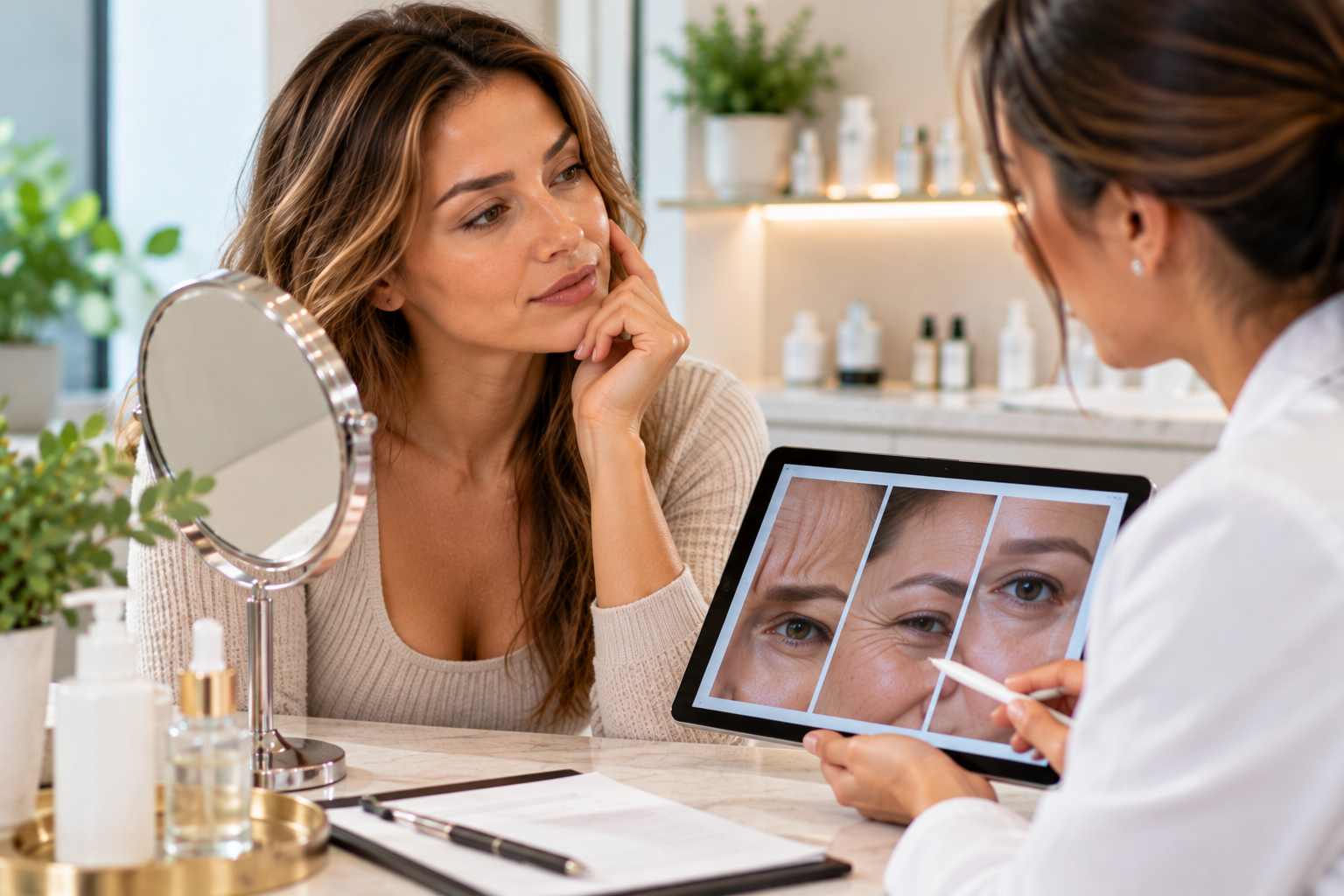
Most consultations follow a simple flow: a conversation about your goals, a review of your health and medications, a close look at your skin, and a discussion of recommended options. You should also hear about realistic results, downtime, and possible side effects. The visit ends with a plan you can take time to think about.
Your provider will ask what bothers you most and what you hope to change. Be specific. "I want to look less tired" and "I have rough texture on my cheeks" lead to different recommendations.
This step matters more than many people expect. Be ready to share:
These details affect which treatments are safe and when. For example, Mayo Clinic notes that doctors may advise against a chemical peel if you have taken isotretinoin in the past six months.
Your provider will assess things such as hydration, texture, tone, pores, sun damage, fine lines, and firmness. Because New England Wellness Center blends aesthetics with functional medicine, they may also ask about sleep, stress, and digestion if those seem connected to what your skin is doing.
Finally, you will talk through options. A plan might be as simple as a HydraFacial every 4 to 6 weeks, or it might combine several treatments over a few months. Good plans include timing, expected results, and how to care for your skin at home.
Yes, especially for first-timers. A consultation helps you avoid trend-driven choices, sets honest expectations, and builds a plan that grows with you. It also gives you a chance to see if you feel comfortable with the team before committing to anything.
If you are in your late teens or twenties, you probably learned about skincare online. That can be great for curiosity, but social media trends rarely account for your skin type, tone, or medical history. A consultation helps you separate what you actually need from what is simply popular.
Younger adults often come in with concerns like:
For these concerns, a provider might suggest a gentle chemical peel, a HydraFacial, or dermaplaning, plus a simple home routine. Prevention at this age mostly means daily sunscreen and consistency, not aggressive treatments. If you have painful, deep, or scarring acne, a dermatologist can evaluate whether you need prescription care.
Many men put off a skin consultation because they are not sure it is "for them." It is. Men deal with sun damage from golf, sailing, and yard work, plus dry winter skin and expression lines from years of squinting.
Men often appreciate a straightforward, efficient plan with minimal downtime. Common first steps include a HydraFacial for hydration and clarity, a conversation about Botox for forehead lines or crow's feet, or a look at sun damage and texture. Your provider can keep the plan simple and focused on what matters most to you.
The best questions focus on results, safety, and fit. Ask what results are realistic for your skin, how many sessions you may need, what downtime looks like, and what risks apply to you. Clear answers to these questions help you make a confident decision.
Here is a short list to bring along:
If you are curious about fillers or neurotoxins, ask about product choices, how long results last, and what risks look like. The FDA's guide to dermal fillers explains that while serious complications are rare, injection into a blood vessel is the most concerning risk. That is one reason why choosing a trained team and having an honest conversation matters.
Come with a clean or lightly made-up face if possible, a list of your current products and medications, and a clear idea of what bothers you most. Photos of your skin at its best or worst can help too. Preparation makes the visit more productive and the plan more personal.
Some concerns need a dermatologist rather than a medical spa. See a dermatologist for a mole or spot that is changing, bleeding, or new, a rash that will not clear, or severe acne that scars. A good consultation will point you in the right direction if something needs specialist care.
Sun protection is also part of every conversation. The Skin Cancer Foundation recommends a broad-spectrum sunscreen with SPF 30 or higher for daily use, which is especially relevant if you spend summers on the South Shore coast.
Timing varies, but a consultation is long enough to talk through your goals, review your history, and look at your skin. Plan to leave room for questions so the conversation does not feel rushed.
No. A consultation is for planning. You can take time to think, and a good provider will never pressure you into treatment.
A facial is a treatment. A consultation is an evaluation and planning visit that helps decide which facial, peel, or other treatment fits your skin best.
Yes. Because New England Wellness Center offers functional medicine as well as aesthetics, you can mention symptoms such as fatigue, hormone changes, or digestive issues. Your provider can let you know if a separate evaluation makes sense.
Yes. A provider can spot what your routine is missing, flag products that may be irritating your skin, and suggest treatments that complement what you already do.
The best skincare decisions start with information, not guesswork. A thoughtful skin care consultation gives you a plan built around your skin, your schedule, and your life on the South Shore, whether you are brand new to treatments or ready for your next step.
To learn more about the team, visit the About Us page or browse Our Treatments. When you are ready, book a consultation at New England Wellness Center in Hingham or call (781) 745-9021.